
Riya: Raj, you won’t believe how cool these new AI photo apps are! I uploaded one of my selfies, and it made me look like a movie star. Everyone’s posting them online — I thought I’d join the trend too.
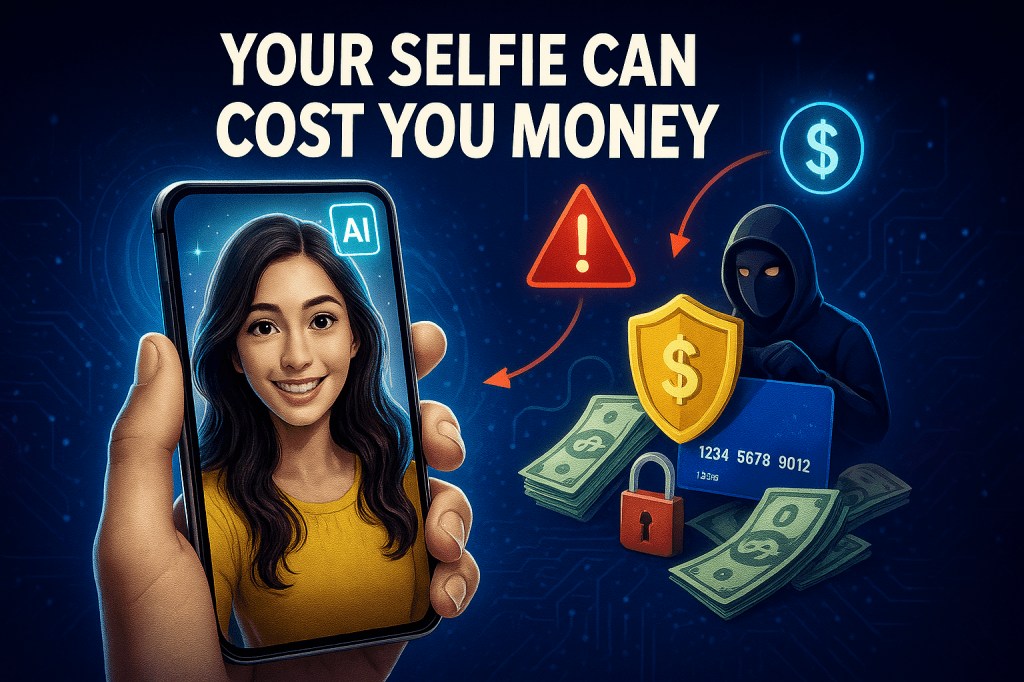
Raj: (smiling) They do look impressive, Riya. But have you ever thought about what happens to those photos once you upload them?
Riya: Not really. I assumed it’s all safe — just a bit of fun, right?
Raj: That’s what most people think. But these AI image generators don’t just make pictures — they collect biometric data. Your face, expressions, and features are unique identifiers — once they’re uploaded, you’re giving that data to a hungry algorithm.
Riya: So, you mean they can actually use my face for something else?
Raj: Exactly. Once your photo is out there, it can be scraped, cloned, or even repurposed to create hyperrealistic fakes — or deepfakes — that look just like you. And that’s where the risk begins.
Riya: (concerned) Oh no, I didn’t realize that! But how does that connect to money or financial fraud?
Raj: Well, scammers can use synthetic identities built from real photos like yours. Imagine someone creating a fake PAN card, Aadhaar, or ID with your photo — they could use it to apply for loans, credit cards, or even commit online frauds.
Riya: That’s terrifying! Can that really happen?
Raj: Unfortunately, yes. AI-generated images are so realistic now that they can sometimes fool basic KYC verification systems. It’s not science fiction anymore.
Riya: So, what can we do to protect ourselves?
Raj: Quite a few things, actually. Here’s what I tell everyone —
1. Be selective about what you upload. Avoid giving clear front-facing selfies to unknown apps or websites.
2. Use avatars or illustrations instead of real photos for public profiles.
3. Check your privacy settings on social media — restrict downloads, tagging, and face recognition features.
4. Don’t reuse the same photo across multiple platforms.
5. Turn on multi-factor authentication for all financial and email accounts.
6. Use strong, unique passwords — and a password manager if needed.
7. Monitor your bank and card statements regularly for suspicious activity.
8. Check your CIBIL report every 6 months to a year. It’s free once a year, and it helps you spot any unfamiliar loans, credit cards, or inquiries — early signs of identity misuse.
Riya: Wow, I’ve never checked my CIBIL report. I’ll do that. I guess it’s like a health check-up, but for your financial life.
Raj: (nodding) Exactly. Think of it as your financial fingerprint — if someone misuses your identity, it’ll show up there before the damage gets bigger.
Riya: You’ve really opened my eyes today. I thought deepfakes were just entertainment, but it’s actually a real risk to my financial identity.
Raj: That’s right, Riya. This isn’t just about filters and fun — it’s about information. Every upload is a small donation to a data ecosystem that can be misused if it falls into the wrong hands.
Riya: So, the bottom line?
Raj: Treat your face like your bank PIN. You wouldn’t share that publicly, right? Similarly, protect your digital identity — because once your face is out there, you can’t change it.
Riya: That’s such a powerful thought. No more random uploads for me! From now on, I’ll think twice before trusting any app with my face.
Raj: (smiling) That’s the spirit. Technology is amazing, but awareness is your strongest safeguard. Be curious, but cautious — your money and identity will thank you for it.
 Simplified Money Talks
This was never known to me. Great 👍
LikeLike