
Shyam looked worried as he stirred his evening tea.
“Bharat,” he said, “every news channel is shouting that RBI has cut the repo rate. Home loans, EMIs, fixed deposits, debt funds—everything seems connected. But honestly, I don’t quite get what really changes for people like me.”
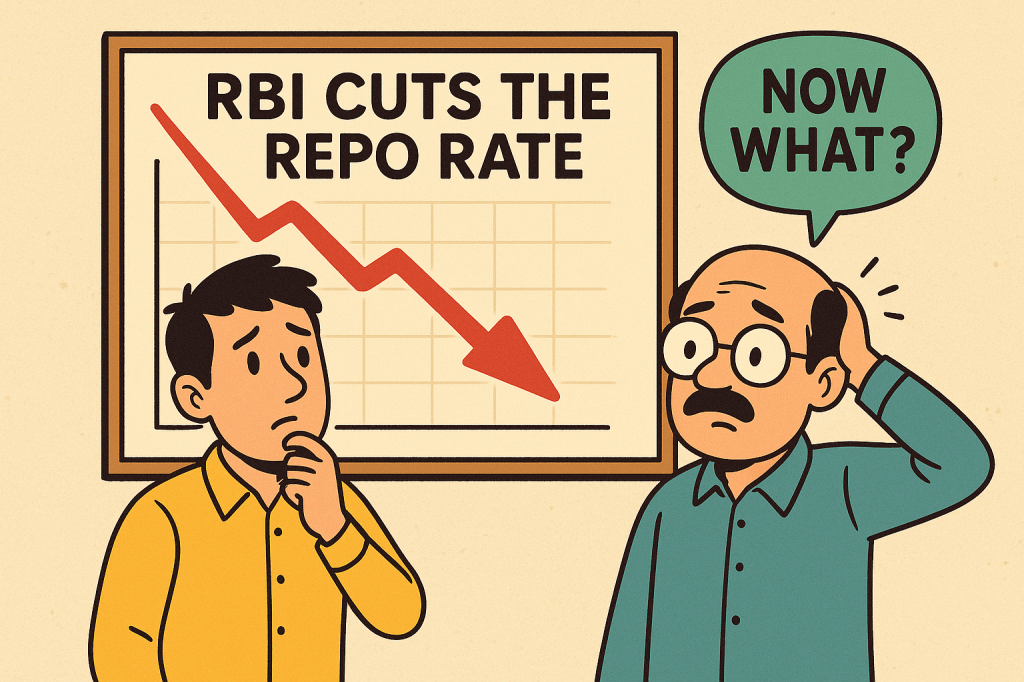
Bharat smiled. “Good question. Let me tell you a story—because a repo rate cut is like a domino effect. One push, and several things start moving.”
First Things First: What Is the Repo Rate?
“Imagine this,” Bharat began.
“Banks are like households. Sometimes they fall short of cash. When that happens, they borrow money from RBI. The interest rate RBI charges banks for this short-term borrowing is called the repo rate.”
“So when RBI cuts the repo rate,” Shyam interrupted,
“banks borrow cheaper?”
“Exactly,” said Bharat. “And when money becomes cheaper for banks, the effects slowly reach all of us.”
How a Repo Rate Cut Reaches Your Home Loan EMI
Bharat continued, “Let’s start with something close to your heart—your home loan.”
- When banks get money at a lower rate from RBI,
- They eventually reduce lending rates for customers,
- Especially for floating-rate loans like home loans.
“So my EMI goes down immediately?” Shyam asked hopefully.
Bharat chuckled. “Not always immediately. Banks pass on rate cuts with some delay. But over time, yes—
your EMI can reduce or your loan tenure can shorten.”
“In simple terms,” Bharat added,
“repo rate cuts are good news for borrowers.”
Shyam nodded. “That part I like.”
What Happens to Fixed Deposits?
“But what about my fixed deposits?” Shyam asked cautiously.
Bharat’s tone turned gentle.
“This is where the story changes direction,” he said.
“When lending rates fall, banks don’t want to pay high interest to depositors either. So after a repo cut:
- New FD rates usually go down
- Renewals happen at lower interest rates
- Long-term FD income slowly shrinks”
“So savers suffer?” Shyam asked.
“Not suffer,” Bharat clarified,
“but returns become less exciting. That’s why rate-cut cycles are great for borrowers—but a bit painful for pure FD investors.”
Now the Interesting Part: What Happens to Bonds & Debt Funds
Bharat leaned forward. “This is where most people get confused.”
“Think of bonds like old contracts,” he explained.
- Old bonds pay higher interest
- New bonds (after rate cuts) pay lower interest
“So old bonds suddenly look valuable,” Shyam said.
“Exactly!” Bharat smiled.
That’s why:
- Bond prices go up
- Debt mutual fund NAVs rise
- Especially funds holding existing bonds
“But,” Bharat raised his finger,
“this gain mostly comes from price appreciation, not long-term income.”
Short-Term Excitement vs Long-Term Reality
Bharat continued, “Once rates are lower:
- New bonds offer lower yields
- Debt funds reinvest money at lower rates
- Returns stabilize and may cool down”
“So the big gains don’t last forever?” asked Shyam.
“That’s right,” said Bharat.
“Rate cuts give debt funds a boost, not a permanent gift.”
So… What Should a Thoughtful Investor Do?
Shyam leaned back. “Okay Bharat, give it to me straight.”
Bharat summarized calmly:
- Borrowers
- Enjoy lower home-loan and personal-loan costs
- Especially helpful if loans are floating-rate
- FD Investors
- Expect lower rates ahead
- Lock-ins need careful timing
- Debt Investors
- Short-term and low-duration funds offer stability
- Long-duration funds can benefit initially but carry more risk
- Don’t chase returns blindly after a rate cut
“The key,” Bharat said,
“is to align your debt investments with your time horizon, not headlines.”
Shyam’s Realisation
Shyam smiled. “So a repo rate cut isn’t good or bad. It just… changes the rules of the game.”
Bharat nodded.
“Exactly. RBI doesn’t cut rates to make investors rich or poor.
It does it to support growth. Smart investors simply adjust their strategy.”
Shyam finished his tea, calmer now.
“Thanks, Bharat. Next time the news screams ‘Repo Rate Cut’,
I’ll know which domino is falling—and which one affects me.”
 Simplified Money Talks