Understanding Mutual Funds – A Shopping Mall Analogy

Amit: Hey Riya, I keep hearing about mutual funds, but there are so many types! Can you simplify them for me?

Riya: Sure! Think of mutual funds like different types of shopping malls—each designed for different needs. Let me break it down with examples you’ll relate to.

Amit: That sounds helpful!

Riya: Let’s start with the three main categories:

1. Equity Funds – Like a Shopping Mall

Just like how different stores in a mall cater to different shoppers, equity funds invests similarly  in different types of companies:

  • Large-Cap Funds: Like big anchor stores—stable and reliable. You shop at these big brands because you trust their quality.
  • Mid-Cap Funds: Like growing retail chains that are becoming popular (think about any successful regional brands that come to your mind). Just as these stores might become the next big thing, mid-cap companies have the same sort of growth potential.
  • Small-Cap Funds: Like promising local boutiques or startups. These carry a higher risk since they might either succeed big or fail, but they could offer great returns—like discovering the next Big Coffee brand when it was just a single coffee shop!

Amit: Oh, so it’s like choosing between shopping at a big mall versus exploring local markets?

Riya: Exactly! Now, let’s move on to the next category.

2. Debt Funds – Like Different Bank Accounts

These are similar to different ways to save your money:

  • Liquid Funds: Like keeping money in a digital wallet for quick shopping—it’s easily accessible and safer than cash.
  • Short-Term Funds: It is similar to a recurring deposit account where you park money for your upcoming vacation in six months.
  • Corporate Bond Funds: Like lending money to your reliable cousin’s successful business—they’ll pay you back with interest.
  • Gilt Funds: Like keeping money in a government bank—super safe, but returns might be lower.
  • Overnight Fund: One of the best options if you are thinking about keeping money for a week to a fortnight

Amit: That makes sense! And what about the third category?

3. Hybrid Funds – Like a Balanced Diet

Just as we balance healthy and tasty food:

  • Aggressive Hybrid Funds: Like a diet with 70% protein (eggs, meat) and 30% carbs (rice, bread)—more growth-focused but they are still balanced.
  • Conservative Hybrid Funds: Like a diet with 25% protein and 75% carbs—safer but with some growth potential.
  • Balanced Advantage Funds: Like adjusting your diet based on your activity level—more carbs on workout days, more protein on rest days.

Special Categories:

  • Index Funds: Like buying everything on a shopping list without making changes—you get exactly what’s on the list (market index).
  • Fund of Funds: Like a food subscription box that contains different meal kits—you get variety managed by experts.

Amit: These examples really help! So, if I’m saving for my daughter’s education in 15 years, I should probably look at equity funds?

Riya: Exactly! Just like you’d plan a big purchase well in advance. For long-term goals like education:

  • Consider Large-Cap Funds as your main course (70%).
  • Add some Mid-Cap Funds for extra growth (20%).
  • Maybe a small portion in Small-Cap Funds for potentially higher returns (10%).

But if you’re saving for next year’s car down payment, you’d want Debt Funds—just like you wouldn’t risk your car money in a new startup!

Amit: This makes so much more sense now. One last question—what about tax-saving funds?

Riya: Ah, ELSS (Equity Linked Savings Scheme) funds! Think of them like a combo deal—you get tax benefits under Section 80C, plus the potential for good returns. It’s like getting a discount while shopping, but you need to hold onto your shopping bags for three years from the date of investment before using them!

Amit: Perfect! Now, I can actually relate mutual funds to things I understand. Thanks, Riya!

Riya: Happy to help! Just remember, just like you don’t buy all your clothes from one store, it’s good to diversify your investments based on your needs and goals.

Smart & Simple: Timeless Rules for Mutual Fund Success

Seetal (Investor): Aakash, I’ve been getting bombarded with investment advice lately – new mutual fund launches, market predictions, hot sectors. It’s overwhelming! How do I cut through all this noise?

Aakash (Financial Advisor): chuckles I completely understand, Seetal. Instead of chasing every new trend, let’s focus on fundamental resolutions that can transform your investment journey. Think of them as your financial compass.

Seetal: Hmmmm!! I am listening.

Aakash: First and foremost – try to know your portfolio like the back of your hand. You’d be surprised how many investors can’t tell me what they own beyond ” the names of some mutual funds companies.”

Seetal: looking slightly embarrassed Guilty as charged. I mean, I get my statements, but I usually just check if the total value has gone up.

Aakash: That’s more common than you think! Start simple – Start categorizing your funds into buckets: equity, debt, and hybrid. Then understand their roles. Are your equity funds focusing on large companies or small ones? Are your debt funds short-term or long-term in nature? It’s like organizing your wardrobe – you need to know what you have before deciding what to buy next.

Seetal: That makes sense. And the other resolution?

Aakash: Regular portfolio check-ups – but here’s the key – with a disciplined schedule. Think of it like your annual health check-up. You wouldn’t skip it, right?

Seetal: True, but I’ve heard people say you should track your investments daily. Isn’t that better?

Aakash: shaking head That’s like weighing yourself five times a day while on a diet – it’ll drive you crazy! I recommend half yearly reviews to stay informed, but make major changes only after 18 months or so. Unless there’s a significant event, like a fund manager change or a major strategy shift.

Seetal: Oh! That’s actually a relief. And what’s the last one?

Aakash: This is crucial – SIP discipline. Think of SIPs as your financial fitness routine. Just like you wouldn’t expect six-pack abs from random gym visits, wealth building needs consistency.

Seetal: But what about when markets crash? Last time that happened, I got scared and stopped my SIPs.

Aakash: That’s exactly when SIPs are most powerful! It’s like getting a discount on your favorite brands. When markets are down, your same SIP amount buys more units. Remember, you’re not just investing in funds – you’re investing in India’s growth story.

Seetal: nodding thoughtfully And I suppose I should increase my SIP amounts when my income grows?

Aakash: Absolutely! Most people remember to upgrade their lifestyle when they get a raise but forget to upgrade their investments. I suggest the 50-50 rule – allocate at least 50% of any raise to increasing your SIPs.

Seetal: These actually sound doable. But how do I stay motivated to stick to them?

Aakash: Here’s how I explain it to my clients – think of your investment journey like driving a car. Your SIPs are the accelerator, pushing you toward your goals. Your half yearly reviews are the brakes and steering, keeping you safely on track. And just like driving, once you develop good habits, they become second nature.

Seetal: smiling That’s brilliant! No more getting distracted by every new fund launch or market prediction.

Aakash: Exactly! Focus on these three resolutions – know your portfolio, review with discipline, and maintain SIP consistency. Master these basics, and you’ll be surprised how much clarity and confidence they bring to your investment journey.

Seetal: Thanks, Aakash! These are definitely going to be my financial resolutions this year. Simple but powerful!

How do you navigate market volatility with mutual funds?

Characters:

  • Rita (Investor)
  • Krishna (Financial Planner)

Scene: A cozy coffee shop where Rita and Krishna meet to discuss the recent market downturn.

Disclaimer: All characters in this article are fictitious and do not bear any resemblance to any person, living or dead.


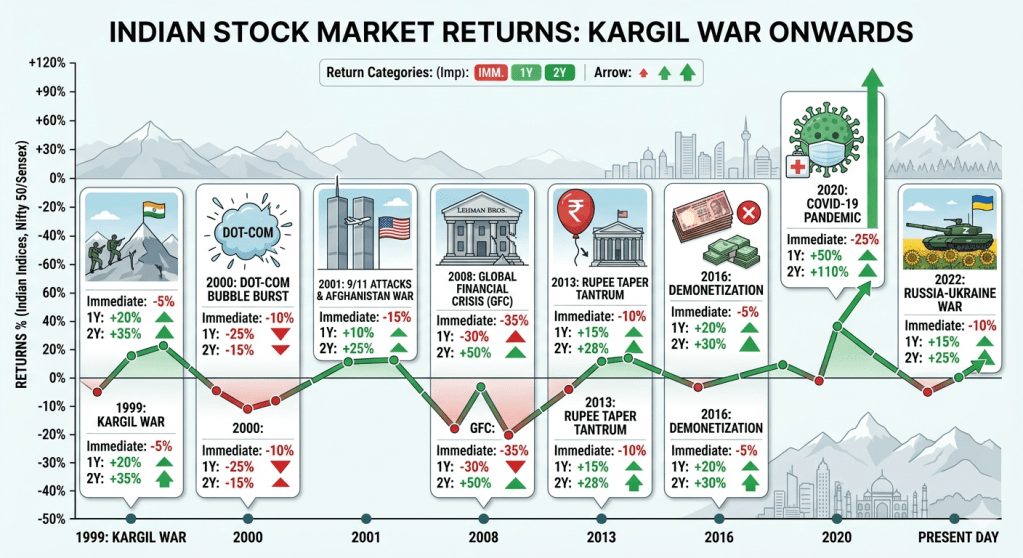
Rita: Krishna, the stock market has been on a rollercoaster ride lately. From an all-time high of 85,478 in September 2024, it’s now down to 76,190—that’s over an 10.8% drop! I’m worried. Should I exit my mutual fund investments?

Krishna: Rita, I understand your concern. Market fluctuations can be unsettling, but it’s important to remember that equities are inherently volatile in the short term. Selling now might not be the best move.

Rita: But what if the market falls further? I don’t want to see my investments shrink any more.

Krishna: That fear is natural, but exiting during a downturn could lock in losses. History shows that markets recover over time, and staying invested allows you to benefit from that recovery.

Rita: So you’re saying I should hold on? But what about my SIPs? Should I pause them until things stabilize?

Krishna: No, Rita! Your SIPs are actually working in your favor right now. When the market is down, you buy more units at lower prices. This helps reduce your average cost and positions you for better long-term returns.

Rita: Hmm, that makes sense. But I’m still unsure about where to invest in this volatile market. Any suggestions?

Krishna: It all depends on your goals and risk tolerance. Let me break it down for you:

  • Short-term goals (1-3 years): Stick to fixed-income investments like short-duration debt funds / ultra-short bond funds to ensure stability and capital preservation.
  • Medium-term goals (3-5 years): A small equity exposure can help boost returns. Consider equity savings funds for a balanced approach or a conservative hybrid fund.
  • Long-term goals (5+ years): Focus on an equity-heavy portfolio. If you’re conservative or worried about volatility, aggressive hybrid funds are a great option. For experienced investors, flexi-cap funds offer good diversification, while small-cap and mid-cap funds can add higher returns, albeit with greater risk.

Rita: Okay, that gives me some clarity. I think I should review my portfolio and align it with my goals.

Krishna: Absolutely! And diversification is key. A well-balanced portfolio across market caps can help manage risks effectively.

Rita: Got it. But what about timing the market? Should I wait for a better entry point?

Krishna: Trying to time the market is a risky game. It’s nearly impossible to predict the bottom. Instead, stay focused on your long-term goals and maintain a disciplined approach.

Rita: I see what you mean. So, the moral of the story is to stay invested and stay disciplined?

Krishna: Exactly! Market downturns are temporary. By sticking to a consistent investment framework based on your time horizon, risk appetite, and asset allocation, you can build lasting wealth.

Rita: Thanks, Krishna. I feel much more confident now. I’ll stay the course and continue with my investments.

Krishna: That’s the spirit, Rita! Remember, patience is the key to financial success.

Overnight Funds: A Smart Alternative for Idle Cash Management

The Indian investor prefers to keep large amounts of cash idle in their savings bank accounts with two things in mind. Point number one they need it for emergency purposes; Point number 2 it gives them a piece of mind and Point 3 could be any other reason haha haha…!!!

What If I tell you that by investing into an overnight fund you can earn daily an average between ₹ 1.40 to 1.60 /- per day on a lump sum investment of ₹ 10,000/- this way you will make more money when compared to a normal savings bank account. Yes, you heard it right.

Let’s decode this fund type today through this short conversation between 2 people.

Jay: Hey, Nikunj! I wanted to pick your brain on overnight funds. Have you looked into them?

Nikunj: Oh, absolutely, Jay. They’re pretty useful if you’re looking for a place to park surplus funds with minimal risk for a short period. Overnight funds are open-ended debt funds that invest in assets with a maturity of just one day.

Jay: So, they’re like super-short-term investments?

Nikunj: Exactly! Here’s how they work: every day, the fund manager starts with cash, invests in overnight bonds, and those bonds mature by the next business day. Then, they reinvest that cash, and the cycle continues daily.

Jay: Got it. And the returns? I’m guessing they’re pretty stable?

Nikunj: Yes, returns are low but consistent since they’re purely interest-based on the daily borrowing and lending rates. This keeps them stable and liquid without much fluctuation. They’re far less volatile compared to other debt funds since the investment only lasts a day.

Jay: That makes sense. And what about redeeming the funds?

Nikunj: SEBI has set specific timings for the cut-off, so if you invest in overnight funds, make sure you’re aware of those. For example, to get the NAV applicable for that day, you need to invest by 12:30 PM. And for redemption, the cut-off is 1 PM.

Jay: Ah, good to know! And are these funds safe against market volatility?

Nikunj: Absolutely. Overnight funds are low-risk because they don’t face credit or interest rate risks like other debt funds with longer maturities might. They don’t get affected by RBI interest rate changes or credit downgrades as much. And since they don’t have an exit load, they’re quite liquid too.

Jay: Sounds ideal for someone like me, who’s risk-averse but wants a safe, short-term option. Any considerations before investing?

Nikunj: Yeah, since returns are lower, it’s essential to check the expense ratio and compare returns among different funds. The returns may vary slightly across funds, so it’s good to pick one with consistent performance and a reasonable expense ratio. Also, these funds are a suitable investment option for anyone who is looking to park their funds for the short term with zero risk and high liquidity. It is also suitable for small investors who are yet to decide the use of funds or are holding for a few days. For example, a borrower who has to make a payment to a supplier in a week can hold the funds in overnight funds rather than in a savings account. This would ensure an optimum utilization of surplus funds with low costs and higher liquidity.

Jay: And what about taxes?

Nikunj: Tax-wise, it’s like other debt funds. The returns are taxed based on your income tax slab.

Jay: Thanks, Nikunj! I might give these a try for short-term cash parking. They seem like a smart alternative to a standard savings account.

Nikunj: Definitely! Just remember to align it with your goals and risk tolerance.

Navigating Market Volatility with Gold: Is It the Right Time to Invest?

It’s a common Italian proverb “Where gold speaks, every tongue is silent.” This sentiment resonates quite well among Indian households as their penchant for Gold investing never seems to die. According to a report an average Indian household has 18% of their total investment in gold. Today will discuss about what are the options available if one is thinking about investing in to the Yellow Metal”

Shreya: Hey Ravi, I’ve been thinking about diversifying my investments. What are your thoughts on investing in gold these days?

Ravi: Good question, Shreya! Actually, gold can be a solid choice, especially during uncertain times. Not long ago, sovereign gold bonds (SGBs) were my top recommendation since they offered tax-free returns at maturity, paid an extra 2.5% interest annually, and were backed by the government. But, as of recent reports, the government has halted fresh SGB launches.

Shreya: Oh, I wasn’t aware of that. So, if I can’t invest in SGBs now, what are my options?

Ravi: That leaves us with two main alternatives: Gold ETFs (exchange-traded funds) and Gold FoFs (funds of funds). I wouldn’t suggest physical gold due to issues with storage, security, and liquidity.

Shreya: Got it. Can you walk me through what Gold ETFs are?

Ravi: Sure. Gold ETFs are like mutual funds but focused solely on gold. Fund houses usually buy physical gold and then store it securely, and then list this gold on the stock exchanges as ETFs. When you buy an ETF, you’re purchasing a share in that gold without needing to hold it physically. And just like stocks, you can trade them on exchanges, which makes investing in gold very convenient.

Shreya: That makes sense. What about Gold FoFs?

Ravi: Gold FoFs invest indirectly in gold through Gold ETFs instead of holding physical gold. Since FoFs operate like regular mutual funds, they don’t require a demat account. You can invest directly through the fund house, and they even allow SIPs.

Shreya: So, Gold FoFs sound more flexible for people who don’t want to open a demat account.

Ravi: Exactly. The downside, though, is cost. Since FoFs invest in ETFs, you end up paying fees at two levels: one for the FoF management by the AMCs and another for the underlying ETFs. So, for long-term investments, the expense ratio is something to watch for.

Shreya: Okay. Between ETFs and FoFs, which one do you think is better?

Ravi: It depends. If you already have a demat account and plan to invest in gold occasionally, Gold ETFs are more cost-effective. On the other hand, if you prefer SIPs and want to invest in gold regularly without a demat account, FoFs can work well.

Shreya: That’s helpful. What other factors should I consider before deciding?

Ravi: To cut it short, there at 3 main things to be considered before investing in either of these options: Expense ratio, Liquidity, and Premium/Discount to NAV. If you are considering ETFs, look at those funds which has lower expense ratios and high liquidity, which ensures smoother trading.

Shreya: Thanks, Ravi. This is a lot clearer now! I’ll take a look at both options and choose based on my needs and the costs involved.

Ravi: Sounds like a plan, Shreya! Let me know if you need help with any specifics.

How to Navigate through Market Dips?

Suman: Hi Pradeep, I’ve been saving for two years now, and I’ve accumulated ₹ 3 lakh, which is just sitting in my bank account. I’ve been thinking about investing, but I’m not sure if this is the right time, especially with the recent market dip. The Sensex dropped from 86,000 to around 81,600 after the Gulf wars impacted oil rates. Should I start investing now, or should I wait?

Pradeep: Hi Suman, first of all, it’s great that you’ve been saving diligently. You’ve taken a significant step in securing your financial future. When it comes to investing, there’s no perfect time. The market will always have ups and downs, but the important thing is to start investing sooner rather than waiting for the ‘perfect moment.’

Suman: That makes sense, but the market dip does seem like a good time to start. I’m just worried about investing a large sum all at once.

Pradeep: You’re right to be cautious about putting all your money in at once. Instead of investing the entire ₹ 3 lakh immediately, you could enter the market gradually using a Systematic Investment Plan (SIP). SIPs allow you to invest a fixed amount every month, which helps you smooth out the impact of market fluctuations. This way, you benefit from both market dips and long-term growth.

Suman: So, a SIP would help me invest even when the market is unpredictable?

Pradeep: Exactly. With a SIP, you don’t have to worry about timing the market. Over the long term, time in the market is more important than trying to time the market perfectly. For example, if you start a SIP now with ₹ 5,000 per month and assume an 11% return (here I have taken a conservative number), you could build a corpus of around ₹ 1.57 crore by the time you’re 60. But if you delay by just five years, that amount could shrink to ₹ 88.55 lakh. That’s a huge difference.

Suman: Wow, I had no idea delaying by just a few years could make such a big difference! But before I jump in, I’m not sure what my investment goals should be.

Pradeep: That’s a great question! Before you start, you need to identify whether your goals are short-term, medium-term or long-term in nature. If you’re saving for something like a vacation in the next three years, you should consider safer options like short-term debt funds. But if you’re thinking about m3dium-term like 3 to 5 years you may consider aggressive hybrid funds and for the long-term wealth building, say for retirement or buying a house, you should look at equity funds.

Suman: I see. But I’m a bit nervous about equity funds since I’m just starting out.

Pradeep: I understand, and that’s why a good starting point could be conservative or aggressive hybrid funds. These funds invest in both stocks and bonds, so they give you some exposure to the stock market but also provide stability through debt investments. They tend to fall less during market corrections, which might give you some peace of mind as a first-time investor.

Suman: That sounds like a safer option. But what if I have more money to invest later on?

Pradeep: If you have more funds to invest, like the ₹ 3 lakh you mentioned, you can deploy it gradually over the next 12 to 18 months through a SIP in aggressive hybrid funds. This way, you reduce the risk of entering the market at a high point and benefit more—you will end up buying more units when prices are low and fewer when they’re high, which lowers your overall cost of investment over time.

Suman: That makes a lot of sense. But what about the current dip in the market? Should I be concerned?

Pradeep: Short-term market movements, like the recent dip, are unpredictable. Investment in equity market is subject to market risk. You would have heard this a lot everywhere. What’s important is that over the long term, the market tends to go up. For instance, despite several corrections, the Sensex has delivered an average annual return of around 13%+ over the past 10 years. By investing regularly through a SIP, you can ride out the market’s ups and downs without worrying about daily movements.

Suman: Okay, that sounds reassuring. Is there anything else I should consider before starting?

Pradeep: Yes, before you begin your investment journey, it’s essential to cover a few financial basics. First, create an emergency fund—enough to cover your six months of living expenses or just in case you face a job loss! You can park this in a liquid fund. Then, if you have any financial dependents, make sure you have life insurance, preferably a term insurance plan. At last, get a health insurance policy. Even if you have coverage from your employer, it’s good to have a personal policy for added protection. Also, do remember that the younger you are the better for you to take a health plan as it will be a cheaper proposition for you along with a Super Top Up Plan.

Suman: Thanks, Pradeep. I hadn’t thought about the emergency fund or insurance. I’ll make sure to sort those out before jumping into investments.

Pradeep: Great! Once those are in place, you’ll be well-prepared to start investing and build long-term wealth. Just follow this mantra – it’s all about starting small and being disciplined and consistent.

The Profit Temptation: Navigating Market Highs with a Long-Term Vision

Last Thursday afternoon, I received a call from one of my investors. His voice was a mix of excitement and uncertainty.

“I’ve made a profit of ₹20 lakhs over the past five years through my SIPs,” he said. “But now the market is soaring, and I’m thinking about booking some of those profits. I still have a long-term goal of investing for another 12 to 15 years, though. What do you think I should do?”

This is quite a common question when markets reach all-time highs. The gains are real, and the numbers in your portfolio look promising, but there’s also that lingering fear of losing it all if the market takes a nosedive tomorrow. It’s the classic struggle: Should I stay, or should I cash out?

The Psychological Dilemma: What Happens If You Sell?

I began by explaining to him the psychological games our mind plays when markets rise and our portfolios grow. Selling your investments during a market high feels like locking in your gains, but it also opens up a set of new challenges:

  • If you sell and the market continues to rise, you might start to regret your decision. It’s natural to feel like you’ve missed out on even bigger profits. Re-entering the market can feel daunting, as the prices are higher, and you’ll fear buying back at the wrong time.
  • If you sell and the market goes down, you might feel a sense of satisfaction for having timed it just right. However, this feeling can be misleading. When the market starts dropping, it’s common to wait for it to “bottom out,” but no one can predict when that bottom will come. The fear of re-entering at the wrong moment can make you stay out of the market for too long, missing the eventual recovery.

It’s important to remember that markets are unpredictable. Sometimes they soar higher after hitting new peaks, and at other times they correct sharply. Trying to guess what will happen next is risky and can often lead to emotional decisions that may not align with your long-term goals.

A Journey Through the Market’s Highs and Lows

I reminded him, “You’ve earned this ₹20 lakhs because you stayed invested through both good and bad times. Think back to the periods when the Sensex was highly volatile, dropping more than 5% in a week. Those were tough moments, but because you remained patient and kept your SIPs running, you’re now seeing these impressive gains.”

The point here is simple: staying invested has rewarded you in the past, and there’s no reason why it wouldn’t continue to do so. It’s the steady, disciplined approach that leads to long-term wealth creation. The market will always have highs and lows, but a long-term investor learns to weather those storms, not run away from them.

Managing Anxiety: Adjust, Don’t Panic

If market highs are making you anxious, there’s no need to rush into selling your investments. Instead, consider rebalancing your portfolio. Here’s what I suggested to him:

  • If you need cash for short-term goals, such as buying a house, funding your child’s education, or any other near-term commitments, it’s wise to move some of your gains into safer, fixed-income options like bonds or debt funds. This ensures that if the market does fall, you’ve protected the portion of your money that you’ll need soon.
  • If your goals are long-term, like retirement, stick to your SIPs. Equity markets are volatile in the short term, but over longer periods, they tend to smooth out. Trying to time the market perfectly is nearly impossible, and most successful investors are those who stay invested, not those who constantly try to jump in and out.

The Value of Asset Allocation

To further ease his mind, I brought up asset allocation. A well-thought-out allocation between equity, debt, and other assets (like gold or real estate) helps manage risk while keeping your portfolio aligned with your financial goals.

Here’s the beauty of it: a solid asset allocation strategy allows you to book profits periodically without the stress of making huge decisions during market highs. For example, if your equity portfolio has grown significantly due to the recent bull run, you could sell a portion and shift it into a safer asset class to rebalance your portfolio. This way, you lock in some gains but still stay invested for the long run.

Final Thoughts

I closed our conversation with this advice: “The key to successful investing is not in trying to perfectly time the markets, but in staying disciplined and sticking to your long-term plan. The market will have its ups and downs, but as long as you stay focused on your goals, you’ll continue to see your wealth grow.”

He listened carefully, then thanked me for the advice. By the end of the call, he had decided to stay the course and trust the process that had already brought him this far.

That’s the thing about investing. It’s a marathon, not a sprint. The markets will rise, and they will fall. But if you keep your eye on your long-term goals, stick to your asset allocation, and avoid being swayed by emotions, the rewards will follow.

And sometimes, the best decision you can make is to simply stay invested.