
Dinesh: Ram, now that I’ve retired, I’m trying to figure out where to park my savings. I want something absolutely safe — no stock market drama — and a steady income to manage my monthly expenses. Any ideas?
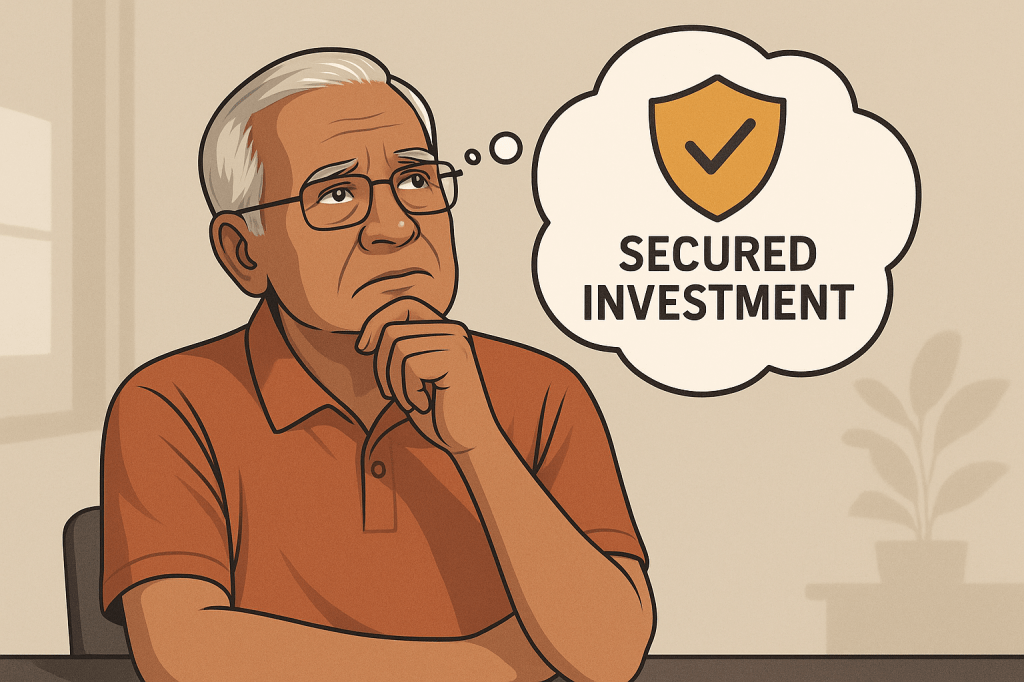
Ram: Of course, Dinesh ji! For someone in your situation, the Senior Citizens Savings Scheme (SCSS) is tailor-made. It’s backed by the Government of India, offers regular quarterly income, and ensures total safety of your principal.
Dinesh: Sounds good. But who can invest in it?
Ram: It’s simple — anyone who is 60 years or older can invest.
If you’re between 55 and 60 and have retired under superannuation or voluntary retirement (VRS), you can also join, as long as you invest within one month of receiving your retirement benefits.
Even defence personnel can invest, regardless of age.
But note — NRIs and HUFs are not eligible.
Dinesh: Got it. So how does one invest — monthly, like an SIP, or lump sum?
Ram: Ah, great question! The SCSS works only through a lump sum investment, not monthly installments or SIPs.
You deposit your chosen amount — say ₹5 lakh, ₹10 lakh, or ₹30 lakh — all at once at the time of opening the account.
You can’t add more money later, but you can open multiple SCSS accounts, as long as your total investment doesn’t exceed ₹30 lakh.
Dinesh: Hmm, so it’s like putting a lump sum from my retirement corpus?
Ram: Exactly! Think of it as parking a portion of your retirement money in a “safety vault” that pays you a guaranteed quarterly income.
For example, if you invest ₹15 lakh at the current interest rate of 8.2% per annum, you’ll earn:
> ₹15,00,000 × 8.2% ÷ 4 = ₹30,750 every quarter.
That’s ₹30,750 credited to your bank account every three months — enough to handle household bills, groceries, or even a small weekend getaway with your wife!
Dinesh: That’s nice! So how long does the money stay locked in?
Ram: The scheme runs for 5 years, and you can extend it once for 3 more years if you wish.
When you extend, the interest rate applicable at that time will apply for the extension period.
Dinesh: What about the interest rate itself? Does it stay fixed forever?
Ram: The Ministry of Finance decides the rate every quarter, based on government security yields.
Currently (for the July–September 2025 quarter), it’s 8.2% per annum, which is quite attractive compared to most bank FDs.
Dinesh: Makes sense. How is the interest paid — monthly or quarterly?
Ram: The interest is paid quarterly, not monthly. The payout dates are:
31 March, 30 June, 30 September, and 31 December.
For example, if you invest today, your first interest payment will arrive at the end of the next quarter — just like clockwork.
Many retirees plan their budget around these payouts — for example:
March interest for property tax or annual insurance,
June for family travel,
September for festival shopping,
December for medical check-ups or gifts for grandchildren.
Dinesh: I like that rhythm! But what about taxes — any relief there?
Ram: Sure. Here’s the tax story in two lines:
Your investment amount qualifies for deduction under Section 80C, up to ₹1.5 lakh.
But the interest earned is fully taxable under “Income from Other Sources.”
If your annual interest exceeds ₹50,000, TDS will be deducted automatically.
Dinesh: Okay, so it’s like regular income — I’ll pay tax based on my slab. What if I need the money early?
Ram: You can close the account prematurely, but there are small penalties:
Before 1 year: No interest is paid.
Between 1–2 years: 1.5% deduction from the principal.
After 2 years: 1% deduction from the principal.
So, if you invested ₹10 lakh and had to withdraw after 18 months, you’d get back ₹9,85,000 plus the interest earned.
Dinesh: Understood. So this is really for long-term income stability.
Ram: Exactly! Most retirees use it to cover monthly expenses or create a “pension-like” income.
For example:
Mr. and Mrs. Mehta invested ₹20 lakh from their retirement corpus. They now receive ₹41,000 every quarter — roughly ₹13,500 per month — which comfortably covers their electricity, grocery, and society bills.
Another retiree, Mr. Nair, invested ₹10 lakh, and uses his quarterly interest to pay for his grandchildren’s school fees every term.
That’s the beauty of SCSS — you invest once and let the income flow in regularly.
Dinesh: Ram, I like how you’ve explained this. I can see myself putting around ₹15–20 lakh here for safety and income. Maybe the rest I’ll keep in debt funds or FDs.
Ram: Perfect strategy, Dinesh ji. The SCSS takes care of your stability and safety, while your other investments can handle growth and liquidity.
 Simplified Money Talks