
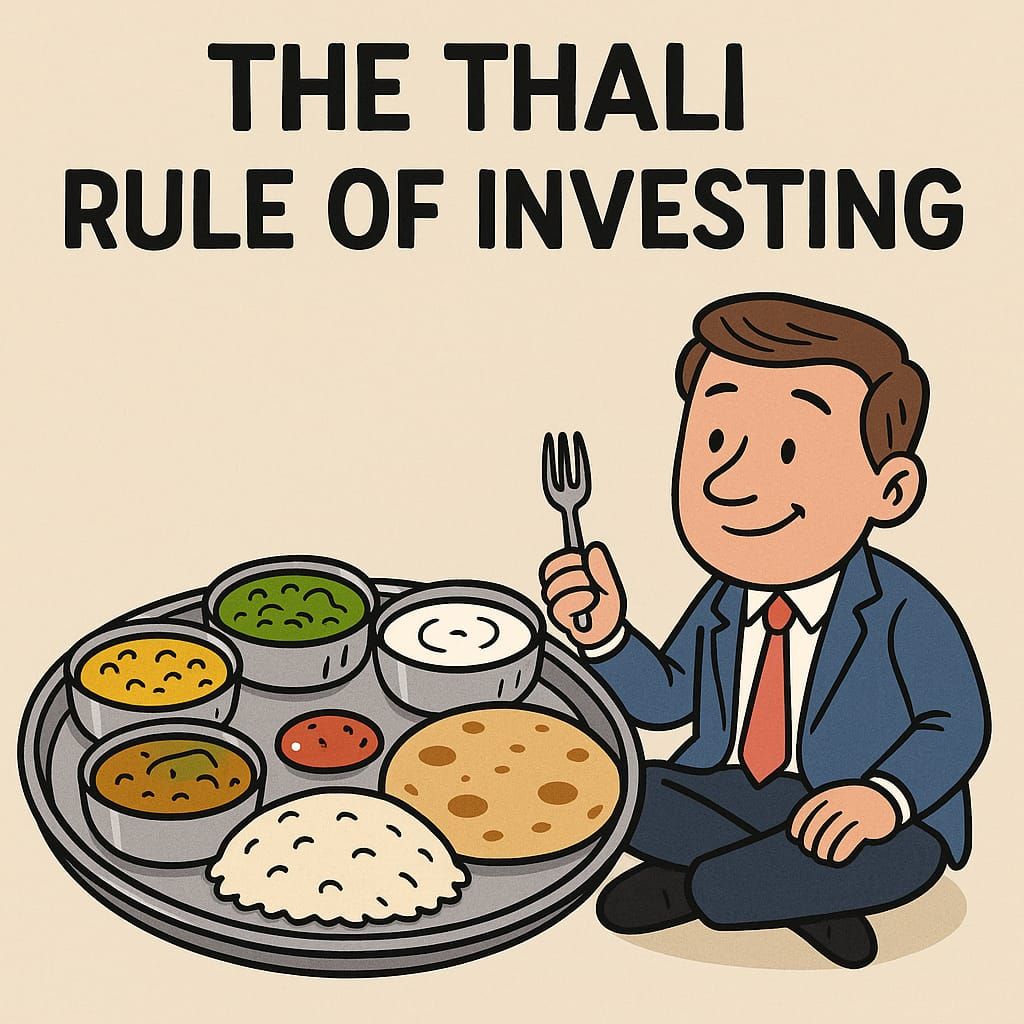
A perfect portfolio should look like a balanced meal—different items that complement each other, not ten bowls of rice.
We’ve all grown up hearing: “Don’t put all your eggs in one basket.” It makes sense right—you spread risk, so if one basket drops, you don’t lose everything.
But here’s the catch: in the investing world, I have met many people who often go overboard with this idea. They spread their money across so many mutual funds, stcoks that instead of gaining safety, they end up with clutter and lower returns. Would you believe it, one investor who came for portfolio revision had bought 87 mutual funds in the name of diversification !
Now, let’s simplify this with some everyday stories.
1. The Chips Problem
Meet Ravi. He loves shopping for snacks. One weekend, he buys ten packets of chips—classic salted, masala, cream & onion, tangy tomato, you name it.
At home, his wife laughs:
“You think you’ve got variety, but at the end of the day, it’s still just chips!”
This is exactly what happens when investors collect 10 to 20 equity mutual funds. On the surface, they look different. But just a deeper look inside, you will find that many of them hold the same big companies—The Infosys, HDFCs, ICICIs Reliance, TCS etc. etc,
Result?
You’ve just bought different flavors of chips—lots of the same thing, no real balance.
2. Wardrobe Woes
Now think about your wardrobe. Imagine you own 15 pairs of jeans. Sure, they’re slightly different shades—light blue, dark blue, faded—but they’re all still jeans.
When you actually need to attend a wedding or a formal dinner, you realize: jeans won’t work. You should have added trousers, a kurta, or a blazer.
In investing, this is what happens when you pile up too many “similar” funds. When markets get rough, all of them behave the same way—and you’re left exposed.
3. What Real Diversification Looks Like
Real diversification is about mixing things that complement each other, not repeating the same stuff.
Think of it like:
- A thali meal: Rice, dal, roti, sabzi, pickle, and a sweet. Each dish adds something unique. Ten bowls of rice won’t make a better meal.
- Exercise: Jogging every day builds stamina, but what about flexibility and strength? That’s where yoga and weights come in. A complete fitness plan mixes them all.
- Streaming apps: Having Netflix, Prime, and Hotstar gives you different shows. Having three Netflix subscriptions adds nothing.
Your investments work the same way. Smart diversification means mixing:
- Asset classes: Equity (for growth), debt (for stability), gold (for protection) FDs / RDS (for emergency corpus).
- Sectors: IT, healthcare, FMCG, energy, etc.—so one industry’s fall doesn’t sink everything.
- Styles: Growth funds chase fast-rising companies, value funds hunt for bargains. Both shine at different times.
- Fund houses: Relying on one AMC is like cheering for only one IPL team—when they lose form, your entire portfolio suffers.
- Geographies: India is just 5% of global markets. Adding international exposure is like adding new spices to your kitchen—it widens your options.
4. Match It to Your Appetite
Diversification also depends on your style as an investor.
- The Conservative Investor: – Think of someone who prefers home-cooked food every day. Simple, safe, predictable. For them, a couple of balanced funds or index funds are enough. Add a little debt for stability. That’s it.
- The Moderate Investor: – Like someone who enjoys trying new restaurants once in a while but still sticks mostly to home food. For them, a mix of equity funds (large and mid-cap), some debt, and a touch of international exposure works well.
- The Aggressive Investor: – The foodie who loves experimenting—street food one day, fine dining the next. They can take higher risks with mid-cap and small-cap funds, plus some international funds, while still keeping a base of large-cap or index funds for balance.
5. The Real Lesson
Diversification isn’t about collecting more funds. It’s about choosing the right mix.
Think of your portfolio like your kitchen.
- Stocking 20 brands of instant noodles doesn’t make you healthier.
- Stocking rice, dal, veggies, fruits, spices, and some treats does.
Too much of the same thing is “clutter.” The right mix is “balance.”
The Bottom Line
– Don’t mistake quantity for quality.
– Don’t collect funds like stamps.
– Build a portfolio that looks like a balanced thali, not a cupboard full of chips.
When your investments are thoughtfully diversified, they’ll not only protect you in bad times but also help you grow steadily in good times.
Remember – More is not better. Better is better.
 Simplified Money Talks